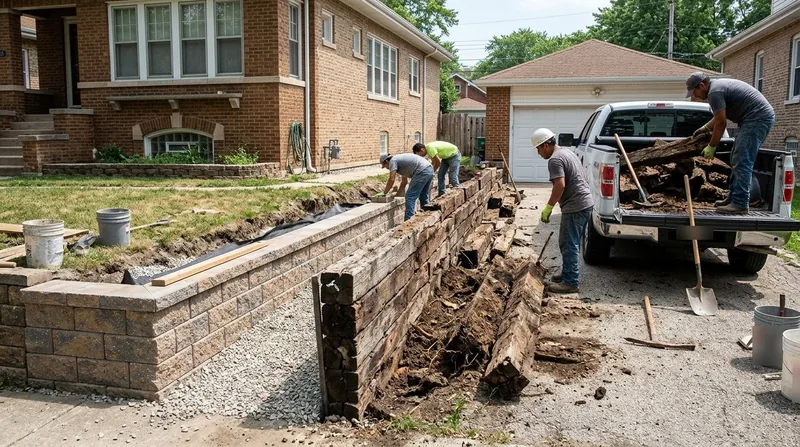




Railroad Tie Wall Replacement in Chicago means removing deteriorated 1970s and 80s creosote-treated ties and rebuilding with modern materials that handle our freeze-thaw cycles, clay soil saturation, and spring thaw water. Chicago sits on a flat former lakebed with dense glacial clay, a high water table near the lakefront, and deep winter frost that heaves and cracks aging timber walls into collapse. Your sunken garden in Lincoln Park, raised front yard in the Bungalow Belt, or driveway cut in Naperville likely has an old railroad tie wall showing black rot, leaning, or crumbling ties that no longer hold back soil. We remove the failed structure, haul away the creosote-treated material, install proper drainage and gravel backfill, and rebuild in segmental block, poured concrete, or limestone that will last 30 to 50 years. This page covers why the job matters, how we execute it, what it costs, and how to hire the right contractor for your Chicago home.
Why Railroad Tie Wall Replacement Matters in Chicago's Climate and Soil
Freeze-thaw cycles and saturated clay soil are the primary killers of railroad tie walls in Chicago and suburbs like Evanston, Oak Park, and Skokie. Winter frost pushes water into the wood, and spring thaw creates hydrostatic pressure that tilts and buckles the wall. Creosote treatment slows rot but does not stop it, especially in a city where the water table sits high and drainage is often blocked or nonexistent. A failing tie wall compromises your yard's stability, creates an eyesore, and can damage adjacent structures or driveways. Replacing it before collapse occurs protects your property value and eliminates ongoing repair costs.
- We remove all creosote-treated ties and dispose of them according to EPA and Illinois environmental guidelines.
- We excavate and clear the old gravel backfill, which often becomes compacted clay and debris.
- We install new drainage stone and a perforated drain line if the site requires it to manage spring water.
- We rebuild the wall in segmental block, poured concrete, or natural limestone to match your home's aesthetic and site conditions.
- We compact and grade the backfill so water sheds away from the wall and your foundation.
Each step protects your yard from the water and frost damage that destroyed the original structure.
Key info: Chicago and surrounding municipalities require a permit for walls above roughly 4 feet measured from the footing, or when a wall supports a driveway or structure. Always verify setback and property-line rules with your local building department. See the City of Chicago Department of Buildings website for current thresholds and engineering requirements.
How We Execute Railroad Tie Wall Replacement in Chicago Homes
Our process starts with a site visit to assess the wall's height, soil conditions, drainage, and what materials will work best for your yard. We then obtain or guide you through the permit process if required, schedule the work around your calendar, and execute the job in phases so your yard is functional as soon as possible. On a typical residential wall in Chicago or Des Plaines, the job takes 3 to 7 days depending on size and access. We work methodically to avoid damage to adjacent landscaping, utilities, or structures.
- We mark the work zone, locate and protect all utilities, and set up equipment and material staging.
- We remove the old railroad tie wall, one course at a time, from top to bottom, and load ties onto a truck for EPA-compliant disposal.
- We excavate the old backfill and any compacted clay, and haul it away if it cannot be reused.
- We set the footing depth and grade based on site soil, frost depth, and the new wall height and material.
- We install drainage stone and a perforated drain line if needed to manage water behind the wall.
- We build the new wall in your chosen material, ensuring proper compaction and alignment.
- We backfill with clean gravel, compact in lifts, and grade the top to shed water away from the wall.
- We clean up all debris and restore the site to match or improve the original condition.
The result is a stable, durable wall that handles Chicago's climate for decades without maintenance.
Local example: A Lincoln Park greystoneowner had a 12-foot tie wall holding back a sunken garden that was tilting 6 inches and leaking water into the basement. We removed the ties, installed a 4-inch perforated drain line with stone backfill, and rebuilt in segmental block to match the building's stone aesthetic. The yard is now stable, the basement stays dry, and the wall is warrantied for 30 years. See our Timber Retaining Walls service page for more on how timber walls fail and how modern materials outperform them.
Railroad Tie Wall Replacement Methods and Materials for Chicago
Your choice of replacement material depends on budget, aesthetic, site drainage, and how long you want the wall to last. All three options we offer handle Chicago's freeze-thaw cycle and clay soil better than wood, and all are built to local code if a permit is required. We help you weigh the trade-offs so you choose the right material for your home and site.
| Material | Description | Best for Chicago Homes |
|---|---|---|
| Segmental Block (SRW) | Interlocking concrete units, typically 12 to 18 inches tall, stacked and backfilled. Durable, modular, and easy to repair individual units if needed. | Most residential replacements. Low maintenance, clean appearance, handles frost and water pressure well. Popular in Chicago neighborhoods like Park Ridge and Arlington Heights. |
| Poured Concrete | Monolithic cast-in-place wall with reinforcing steel, built to engineer specs. Strongest option for tall or heavily loaded walls. Requires formwork and site access. | Tall walls, steep sites, or when a driveway or structure loads the wall. Common in Evanston and Wilmette where grade changes are steep. Lasts 50+ years. |
| Natural Stone (Limestone, Fieldstone) | Dry-stacked or mortared Joliet or Lemont limestone, or salvaged fieldstone. Aesthetic appeal, blends with older Chicago homes, extremely durable. | Historic homes, visible garden walls, and properties where appearance matters most. Common in Lincoln Park and Logan Square. Costs more upfront but ages beautifully. |
| Timber Replacement (Not Creosote) | Modern pressure-treated lumber or composite timber, if a rustic look is desired. Shorter lifespan than concrete or stone but lower initial cost than masonry. | Small walls, temporary solutions, or budget-conscious projects. Not recommended for Chicago's high water table. Requires inspection every 5 to 10 years. |
We recommend a site visit and photo consultation to determine which material is best for your wall, yard, and budget.
Railroad Tie Wall Replacement Cost in Chicago: What to Expect
Railroad tie wall replacement in Chicago typically starts at $35 per square foot for segmental block on a straightforward residential job with good access, level ground, and standard soil conditions. That price covers demolition and haul-away of the old ties, new gravel backfill, compaction, and the new wall built to code. Costs rise when the wall is tall, when soil is poor or saturated, when access is tight (narrow yards, alley walls), or when you choose natural stone or poured concrete instead of block.
A typical 20-foot-long by 4-foot-tall segmental block wall in Chicago runs $2,800 to $3,600 all-in. A 30-foot by 6-foot wall in poured concrete with drainage and engineer drawings runs $4,500 to $7,500 or more. Natural stone costs 20 to 40 percent more than block because material and labor are higher. Getting two or three estimates from licensed contractors lets you compare scope, materials, and price so you make an informed choice. See our full pricing page for detailed breakdowns by wall type and height.
Factors that move the cost up include frozen or clay-heavy soil requiring deeper footings, a high water table requiring extensive drainage, proximity to structures or utilities, and permit requirements that may call for engineer-designed drawings. We provide a free estimate within 24 hours and walk you through every line item so you understand what you are paying for. Call us at (872) 253-4548 or request an estimate online if you are ready to move forward.
Railroad Tie Wall Replacement Near Me: What Chicago Homeowners Should Know When Hiring
Hiring the right contractor for your railroad tie wall replacement means checking three things: licensing and insurance, multiple estimates, and references from recent jobs in your neighborhood. Chicago and suburbs like Skokie, Naperville, and Joliet require retaining wall contractors to hold a general contractor license or specialty license if the wall exceeds local height or complexity thresholds. Verify current licensure with the Illinois Secretary of State or your city's building department. Ask for proof of liability insurance and workers compensation coverage, and confirm that your contractor pulls permits and follows code for your specific project.
Get at least two estimates so you can compare materials, methods, timeline, and price. A low bid is a red flag if it cuts corners on drainage, footing depth, or backfill compaction. Ask each contractor for three references from jobs in Chicago or your suburb completed in the past two years, and call them to ask about quality, timeline, and how the wall has held up. If your wall is over 4 feet tall or supports a driveway, confirm that your contractor understands permit requirements and is willing to work with a licensed engineer if drawings are needed. If your property is in an HOA, check covenants for material or design restrictions before you commit to a contractor.
Contact us at Chicago Retaining Wall to request a free estimate or ask questions about your specific wall. Our team stands behind every job with a 30-year warranty on materials and workmanship.
Railroad Tie Wall Replacement in Chicago: Pricing Guide
| Service | Price | Details |
|---|---|---|
| Segmental Block Wall Replacement | Starting at $35/sq ft | Includes demolition, haul-away, new gravel backfill, and segmental block wall built to code for residential yards |
| Poured Concrete Wall Replacement | Starting at $50/sq ft | Reinforced concrete with engineer-designed footing, formwork, and drainage; cost rises with wall height and surcharge loading |
| Natural Stone Wall Replacement | Starting at $55/sq ft | Joliet limestone or fieldstone, dry-stacked or mortared; material and labor cost more but aesthetic value is high for historic homes |
| Drainage and Site Prep | Included or $8-15/sq ft extra | Perforated drain line, stone backfill, and compaction included in base price; extensive dewatering or poor soil adds cost |
| Permit and Engineering | Included or $500-2000 extra | Contractor handles permit filing; engineer drawings required for walls over 4 feet or supporting structures cost additional |
| Free Estimate | No charge | Response within 24 hours, on-site assessment, written proposal with scope and materials, no obligation to book |
Indicative pricing, the exact cost depends on square footage, finish, and site access. Free personalized estimate within 24h at (872) 253-4548.


