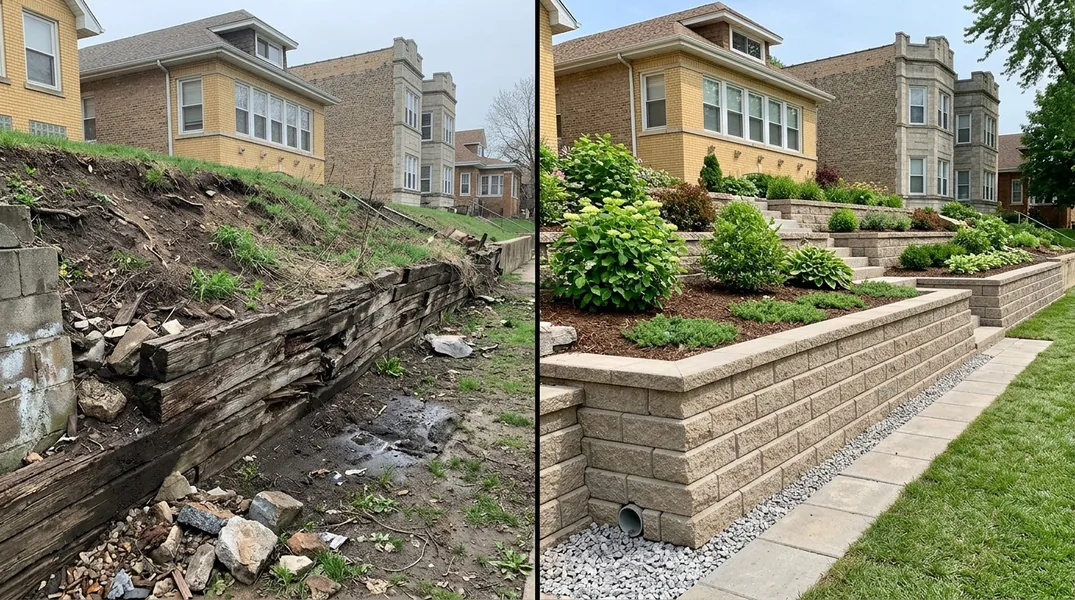
Why Spring Thaw Is a Critical Threat to Your Retaining Wall
Every spring, Chicago homeowners face a seasonal crisis: as snow and ice melt, massive volumes of water saturate the soil behind retaining walls. This isn't just a minor inconvenience. The combination of freeze-thaw cycles and rapid water accumulation creates forces that can buckle, crack, and ultimately destroy even well-built walls within just a few seasons.
The problem begins in winter when water seeps into soil cracks and freezes. As ice expands, it pushes against your retaining wall with tremendous force. When spring arrives and everything thaws, the soil becomes oversaturated, and water pressure builds up behind the wall. This phenomenon, called hydrostatic pressure, is one of the most destructive forces in landscape engineering. Without proper drainage systems in place, your wall is essentially fighting a losing battle against nature's seasonal assault.
Understanding Hydrostatic Pressure and Its Impact on Retaining Walls
Hydrostatic pressure occurs when water accumulates in the soil behind your retaining wall and exerts outward force on the structure. Think of it like filling a bucket with water. The deeper the water, the greater the pressure at the bottom. The same principle applies to retaining walls. When soil becomes saturated with water from spring snowmelt or heavy rain, the weight and pressure of that water pushes directly against the back of your wall, trying to tip it forward or crack it from within.
Most homeowners underestimate how powerful this pressure becomes. A single cubic foot of water weighs about 62 pounds. When you're dealing with dozens or hundreds of cubic feet of water-saturated soil behind a wall, you're looking at thousands of pounds of force concentrated on a structure that may not have been designed to handle it. Over time, this pressure causes walls to lean, develop horizontal cracks, and eventually fail. The damage often happens gradually, which is why many property owners don't notice problems until their wall is already severely compromised.
Poor Drainage: The Root Cause of Retaining Wall Failure in Chicago
Poor drainage is the single most common reason retaining walls fail in the Chicago area. Many older walls were installed without any drainage system at all, or with inadequate drainage that has deteriorated over time. When water cannot escape from behind the wall, it has nowhere to go except to build pressure against the structure. This is particularly problematic in spring when the ground is already saturated from winter precipitation and thawing snow.
The issue is compounded by Chicago's clay-heavy soil composition, which doesn't drain naturally. Clay holds water and prevents it from percolating down through the soil profile. This means water sits behind your wall for extended periods, constantly pushing outward. Without proper retaining wall drainage solutions, even a structurally sound wall will eventually succumb to this relentless pressure. The good news is that modern drainage systems can virtually eliminate this problem when installed correctly during Retaining Wall Installation or added during Retaining Wall Repair.
How a Retaining Wall French Drain Protects Your Property
A retaining wall French drain is one of the most effective solutions for managing water behind your wall. This system consists of a perforated pipe installed at the base of the wall, surrounded by gravel and landscape fabric. The perforated pipe collects water that seeps through the soil and channels it away from the wall to a safe discharge point. By intercepting water before it can accumulate and create hydrostatic pressure, a French drain prevents the vast majority of drainage-related failures.
The beauty of a properly installed retaining wall French drain is that it works passively. It requires no electricity, no moving parts, and minimal maintenance. Water naturally flows through the gravel and into the perforated pipe, which then carries it away from your property. This simple but elegant system has been proven effective for decades and remains the industry standard for professional installations. When combined with a waterproof membrane on the back of the wall, a French drain system creates a comprehensive defense against spring thaw damage and year-round moisture problems.
If your existing wall shows signs of drainage problems, such as water seeping from the base, efflorescence (white mineral deposits), or visible cracks, adding a French drain may be possible during a Retaining Wall Repair project. However, prevention is always better than repair. New installations should include proper drainage from day one.
Signs Your Retaining Wall Is Suffering from Drainage Problems
Recognizing the warning signs of drainage failure early can save you thousands of dollars in repairs or replacement costs. The most obvious sign is visible water seeping from the base or face of the wall, particularly during spring thaw or after heavy rain. You might also notice efflorescence, which appears as white, chalky deposits on the wall surface. These deposits form when water dissolves minerals in the soil and carries them to the wall surface, where they crystallize as the water evaporates. While efflorescence itself isn't structural damage, it's a clear indicator that water is moving through your wall.
Other warning signs include horizontal cracks running across the face of the wall, bulging or leaning sections, and soil erosion at the base of the wall. If you notice any of these symptoms, contact Chicago Retaining Wall at (872) 253-4548 for a professional assessment. Early intervention can often prevent catastrophic failure. In some cases, the wall can be saved with proper drainage installation or repairs. In others, Retaining Wall Replacement may be the most cost-effective solution.
Professional Retaining Wall Installation Near Me: Protecting Against Spring Thaw Damage
If you're planning a new retaining wall or need to address problems with an existing one, working with experienced professionals is essential. Chicago Retaining Wall specializes in designing and installing drainage systems that protect your wall from spring thaw damage and hydrostatic pressure. Our team understands the unique challenges that Chicago's climate and soil conditions present, and we design every installation with these factors in mind.
Proper installation includes site grading to direct surface water away from the wall, installation of a high-quality French drain system, use of appropriate backfill materials, and installation of a waterproof membrane when necessary. Concrete Retaining Walls require especially careful attention to drainage, as concrete is susceptible to water damage and freeze-thaw cycles. When you choose a professional installer, you're investing in a wall that will protect your property for decades to come. To discuss your retaining wall needs and get a free estimate, reach out to us today at (872) 253-4548 or visit our website at https://chicago-retaining-wall.com.
Looking for a professional retaining wall contractor in Chicago? Chicago Retaining Wall responds fast for all your retaining wall needs.
Get a Free QuoteOur services: Retaining Wall Installation · Retaining Wall Repair · Retaining Wall Replacement