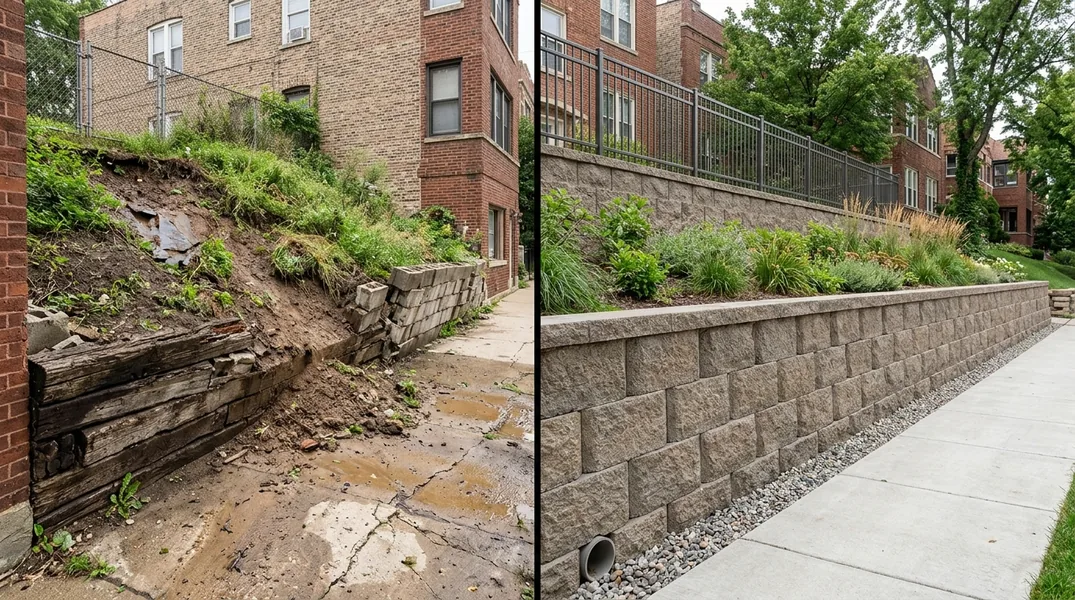
Understanding Frost Heave and Its Impact on Retaining Walls
Winter in Chicago brings more than just snow and ice. The freeze-thaw cycle that occurs repeatedly during cold months can cause significant damage to retaining walls, particularly through a process known as frost heave. Frost heave occurs when water in the soil behind or beneath your retaining wall freezes and expands, exerting tremendous pressure on the structure. This expansion can push your wall forward, causing it to lean, crack, or even fail completely.
The problem is especially pronounced in areas with poor drainage or clay-heavy soil, both common conditions in the Chicago region. When water cannot drain properly, it remains trapped in the soil. As temperatures drop below freezing, that water turns to ice, which takes up more space than liquid water. This expansion creates lateral pressure against your retaining wall, and over multiple freeze-thaw cycles throughout winter, the cumulative effect can be devastating. Homeowners often notice a leaning retaining wall in spring after the winter thaw, when the damage becomes visually apparent.
Signs Your Retaining Wall Has Been Damaged by Frost Heave
Recognizing the early warning signs of frost heave damage is crucial for determining whether your wall can be salvaged or needs replacement. A leaning retaining wall is the most obvious indicator, but there are other telltale signs to watch for. Look for horizontal cracks running across the face of the wall, vertical cracks that widen toward the top, or sections of the wall that appear to bulge outward. You might also notice gaps forming between the wall and the soil, or water pooling against the base of the structure after rain or snow melt.
Another common sign is the appearance of efflorescence, a white, chalky substance on the wall's surface. This indicates water is moving through the concrete or stone and depositing minerals as it evaporates. If your Concrete Retaining Walls show any combination of these symptoms, it's time to have a professional assessment. The severity and location of damage will determine whether Retaining Wall Repair is sufficient or if Retaining Wall Replacement is necessary.
When Retaining Wall Crack Repair Makes Sense
Not all frost heave damage requires complete replacement. If the structural integrity of your wall is still sound and the damage is relatively minor, targeted Retaining Wall Repair may be the most cost-effective solution. Small horizontal cracks, minor leaning that hasn't progressed significantly, and surface spalling can often be repaired without removing the entire structure. Modern repair techniques, including epoxy injection, helical tiebacks, and reinforcement systems, can stabilize a damaged wall and extend its lifespan considerably.
The key to successful crack repair is addressing the underlying cause of the frost heave. Simply filling cracks without improving drainage will only delay the inevitable, as the same freeze-thaw cycle will continue to damage the repaired wall. Any competent repair work must include installing or improving drainage systems behind the wall, such as perforated drain pipes and gravel backfill, to prevent water accumulation. This comprehensive approach can restore functionality to a wall that might otherwise require complete replacement, making it an attractive option for budget-conscious homeowners.
When Full Retaining Wall Replacement Is Necessary
Severe frost heave damage often leaves no choice but complete Retaining Wall Replacement. If your wall is leaning significantly (more than two inches out of plumb), if large sections are cracked or crumbling, or if the wall is actively failing, repair is no longer a viable option. Attempting to repair a severely compromised wall is like putting a bandage on a broken bone. The wall will continue to deteriorate, and any repairs will likely fail, wasting your money and leaving your property unprotected.
Replacement also provides an opportunity to build a better wall from the start. Modern Retaining Wall Installation techniques incorporate proper drainage design, appropriate soil preparation, and structural reinforcement that prevents future frost heave damage. A new wall can be engineered specifically for Chicago's climate and soil conditions, ensuring it will withstand decades of freeze-thaw cycles. While replacement requires a larger upfront investment than repair, it provides peace of mind and eliminates the risk of the same problem recurring.
Drainage Solutions to Prevent Future Frost Heave
Whether you choose repair or replacement, addressing drainage is absolutely essential. The root cause of frost heave is water accumulation, so any solution must include a comprehensive drainage strategy. This typically involves installing a perforated drain pipe at the base of the wall, backfilling with gravel instead of clay soil, and potentially adding a geotextile fabric to prevent soil from clogging the drainage system. These measures ensure that water drains away from the wall rather than freezing against it during winter.
In some cases, surface drainage improvements are equally important. Grading the soil away from the wall, installing gutters and downspout extensions that direct water away from the structure, and avoiding landscape irrigation that directs water toward the wall can all make a significant difference. For properties in areas prone to poor drainage, a French drain system or sump pump may be warranted. The investment in proper drainage is far less than the cost of repairing or replacing a wall damaged by frost heave, making it one of the smartest preventive measures a homeowner can take.
Getting a Professional Assessment for Your Damaged Wall
The decision between repair and replacement should never be made in isolation. Every retaining wall situation is unique, and what works for one property may not be appropriate for another. Factors such as the wall's age, material composition, the extent of damage, soil conditions, drainage patterns, and your long-term plans for the property all play a role in determining the best course of action. That's why a professional assessment is invaluable before making any decisions.
Chicago Retaining Wall specializes in evaluating frost-damaged retaining walls and recommending the most appropriate solution for each property. Our team can assess whether your wall can be saved through targeted repairs or whether replacement is the wiser investment. We'll also identify any drainage issues that contributed to the damage and ensure they're corrected as part of the solution. To schedule a professional evaluation and discuss your options, contact Chicago Retaining Wall at (872) 253-4548 or request a free estimate online. Let our experts help you make an informed decision that protects your property for years to come.
Looking for a professional retaining wall contractor in Chicago? Chicago Retaining Wall responds fast for all your retaining wall needs.
Get a Free QuoteOur services: Retaining Wall Installation · Retaining Wall Repair · Retaining Wall Replacement