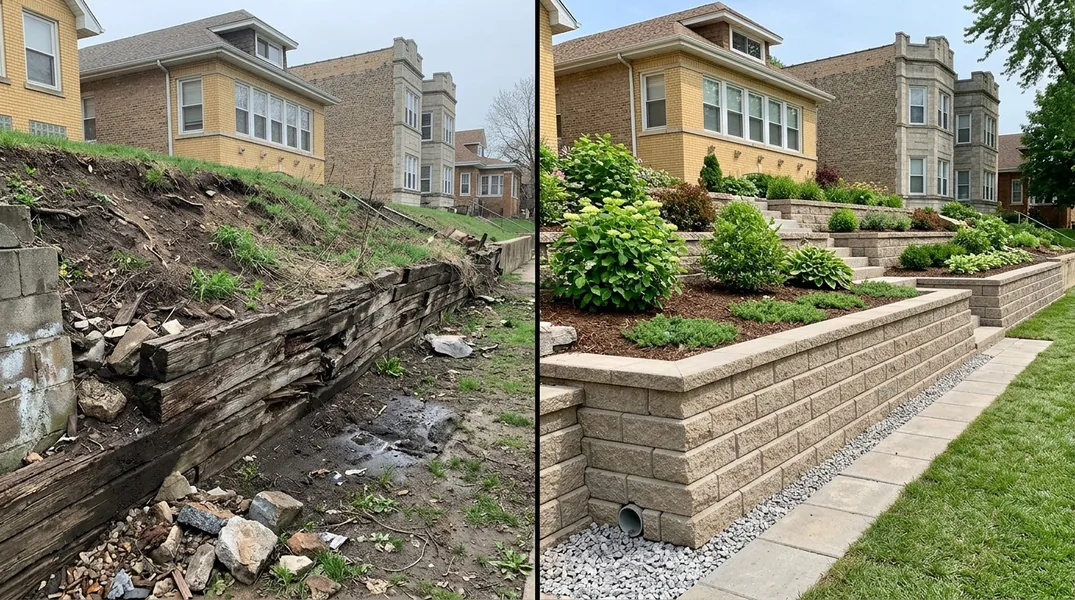
Understanding Chicago's Unique Soil Challenges
Chicago sits on some of the most challenging soil conditions in the Midwest. The region's heavy clay composition, left behind by glacial activity thousands of years ago, creates a perfect storm for retaining wall problems. Unlike sandy or well-draining soils found in other parts of the country, Chicago's clay expands when wet and contracts when dry, creating constant pressure against retaining structures.
This expansion and contraction cycle is relentless. During spring thaw and heavy rainfall, clay absorbs water like a sponge, swelling and pushing outward with tremendous force. Come summer, the same clay dries out and shrinks, creating voids and weakening the soil's structural integrity. A retaining wall built without proper drainage and reinforcement in Chicago clay is essentially fighting a losing battle against these natural forces. Over time, even well-constructed walls can begin to show signs of stress if the underlying soil dynamics aren't properly managed from the start.
Common Causes of Retaining Wall Failure in Clay Soil
The primary culprit behind most retaining wall failures in clay-heavy areas is inadequate drainage. When water builds up behind a retaining wall, the hydrostatic pressure becomes enormous. A single cubic foot of water weighs about 62 pounds, and when that water is trapped behind a wall for months at a time, the cumulative force can exceed what the wall was designed to withstand. Many older retaining walls in the Chicago area were built without proper drainage systems, making them especially vulnerable to failure as they age.
Poor compaction during Retaining Wall Installation is another frequent cause of premature failure. If the soil behind the wall isn't properly compacted in layers, it settles unevenly over time, creating weak spots and allowing water to migrate more easily. Additionally, insufficient wall height calculations or inadequate reinforcement for the soil type can lead to structural failure. The weight and pressure of clay soil require thicker walls, deeper footings, and stronger reinforcement than many homeowners realize. Frost heave, common in Chicago winters, can also destabilize walls by lifting and shifting the foundation, especially if proper frost protection wasn't incorporated during construction.
Warning Signs Your Retaining Wall Is in Trouble
A Retaining Wall Repair call should be your first action if you notice visible cracks running horizontally or diagonally across the wall face. Horizontal cracks, in particular, suggest that water pressure is building up behind the wall and pushing outward. Vertical cracks are less urgent but still warrant attention, as they can allow water infiltration that worsens over time. If you see cracks that are widening or new cracks appearing season to season, don't wait to address the problem. Small cracks are much easier and less expensive to repair than major structural failures.
A bowing or bulging wall face is a serious red flag that requires immediate professional attention. When you see the wall surface curving outward, it means the soil pressure has already overcome the wall's structural resistance. This is not a cosmetic issue; it's a sign that the wall is actively failing and may collapse without intervention. Similarly, a leaning retaining wall that tilts noticeably away from vertical indicates foundation settlement or soil movement. Gaps appearing between the wall and the soil, water seeping or pooling at the base, and soil slumping or erosion at the top of the wall are all warning signs that the structure is compromised. Any of these conditions should prompt you to contact a professional for a thorough evaluation.
The Difference Between Bowing, Leaning, and Complete Failure
A Concrete Retaining Walls may experience different types of distress, each with its own implications. Bowing refers to the outward bulging of the wall face, usually caused by excessive hydrostatic pressure or soil settlement. This is often reversible if caught early, though it requires professional intervention. A leaning retaining wall tilts at an angle but may not show obvious bowing; this typically results from foundation issues, frost heave, or uneven soil movement beneath the footing. While concerning, a leaning wall can sometimes be stabilized or repaired depending on the underlying cause and the wall's age.
Complete failure occurs when the wall loses structural integrity entirely and either collapses or becomes unsafe to remain standing. At this point, Retaining Wall Replacement is often the only viable solution. The good news is that most walls don't go from perfect to failed overnight. There's usually a window of time, sometimes months or even a year or two, during which warning signs appear and repairs are still possible. The key is recognizing those early warning signs and taking action before the damage becomes irreversible. Waiting too long can turn a straightforward repair into a costly replacement project.
How to Inspect Your Retaining Wall for Damage
Start your inspection by walking the full length of the wall and looking for visible cracks, bulges, or tilting. Run your hand along the surface to feel for rough spots, spalling (concrete flaking off), or areas where the wall feels unstable. Check the base and top of the wall for gaps, erosion, or water pooling. Look behind the wall if possible; if you see water accumulation, soil erosion, or roots growing through cracks, these are all signs of structural compromise. Take photos of any damage you notice, as these can help a professional assess the severity and recommend appropriate repairs.
Check for drainage problems by observing how water behaves during and after rain. If water is pooling behind the wall or running down the face in specific areas, drainage is inadequate. Look at surrounding vegetation; if plants near the wall are unusually healthy or conversely, if they're dying, this can indicate water saturation issues. Also examine the soil at the top of the wall; if it's settling or eroding, this suggests the wall is moving. While you can do a basic visual inspection yourself, a professional structural evaluation is always recommended if you notice any significant issues. A trained eye can identify problems that aren't immediately obvious and recommend the right course of action before minor issues become major failures.
When to Call a Professional for Retaining Wall Repair Near Me
You don't need to wait for catastrophic failure to seek professional help. Any of the warning signs mentioned earlier should prompt a call to a qualified retaining wall contractor. If you're seeing cracks wider than one-quarter inch, any bowing or bulging, visible tilting, or water issues, it's time to get a professional opinion. The longer you wait, the more expensive the repair becomes. What might have been a manageable repair project today could become a full replacement scenario within a year or two if left unaddressed. Chicago Retaining Wall can provide a thorough evaluation and honest recommendations about whether your wall needs repair, reinforcement, or replacement.
When you contact a professional, be prepared to describe what you've observed and provide photos if possible. Mention how long the damage has been visible and whether it's getting worse. A qualified contractor will inspect the wall, assess the soil conditions, evaluate drainage, and determine the root cause of the failure. They'll then recommend the most cost-effective solution for your specific situation. If you're in the Chicago area and concerned about your retaining wall, don't hesitate to reach out for a free estimate. You can also call Chicago Retaining Wall directly at (872) 253-4548 to discuss your concerns with an experienced professional.
Prevention: Building Retaining Walls That Last in Chicago Clay
The best approach to retaining wall problems is prevention. If you're planning a new Retaining Wall Installation, working with a contractor who understands Chicago's soil challenges is essential. Proper drainage systems, including perforated drain pipes and gravel backfill, are non-negotiable in clay soil. The wall itself must be built with adequate thickness, depth, and reinforcement for the specific height and soil conditions. Using quality materials, whether concrete, stone, or other options, ensures the wall can withstand the unique pressures of Chicago's climate and soil.
Proper site preparation and soil compaction during construction are just as important as the wall itself. Each layer of soil behind the wall should be compacted to specification, and the foundation must be set below the frost line to prevent heave. Regular maintenance also extends wall life; keeping gutters clean, maintaining proper grading so water runs away from the wall, and addressing small problems immediately all help prevent major failures down the road. If you're considering new construction or renovation in Chicago, investing in proper retaining wall design and installation upfront will save you thousands in repairs later. The pricing for a well-built wall is far less than the cost of replacing a failed one.
Looking for a professional retaining wall contractor in Chicago? Chicago Retaining Wall responds fast for all your retaining wall needs.
Get a Free QuoteOur services: Retaining Wall Installation · Retaining Wall Repair · Retaining Wall Replacement